Thursday, March 22, 2012

Vigilante Shoots Vigilante: Utah Incident and Stand Your Ground Law

A 2009 shooting in Utah demonstrates the problems with Shoot First laws, as drafted and promoted by ALEC and conservative Republican legislators that expands the ability to shoot upon belief of threat off the premises of one's own property.  This was exactly the kind of incident that law enforcement, prosecutors and opponents of the Minnesota Shoot First law described, and which the ALEC legislators and their associates disregarded.  It exemplifies why opponents call these Shoot First, because the questions are only asked and answered after someone has either been shot or shot at.
This incident points up a number of the problems with Shoot First laws, including vigilanteism, the lack of authority or official recognition for some of these self-appointed neighborhood watches that operate contrary to the directions of police, and the failure of the shooters to identify themselves, as well as their lack of authority to act to demand others explain themselves and their actions to them.
One of the aspects of the Trayvon Martin shooting that has intrigued me, but has received relatively little attention in the media storm of attention so far, is the claim by Zimmerman and his neighbor and fellow self-appointed co-captain of their neighborhood watch is the claim that previous crime was committed by black teens.  So far, there is no evidence that I can find that supports that claim, and the Sanford PD does not support that claim when queried by local media.  The mistaken assumptions of self-appointed vigilante civilians on patrol figure significantly in this Utah shooting, and in the Treyvan Martin shooting.
So far as I can tell at this point, in the Trayvon Martin shooting and in this Utah shooting there were in each neighborhood watch ONLY the two self-appointed captains, but not a larger group of people from the neighborhood.  On that basis I challenge whether two guys, in either instance, legitimately constitutes all by themselves a valid group that really is representing a neighborhood. 
In both cases, the individual doing the shooting does not appear to have identified themselves as acting on behalf of a group.  In both cases, the local police do not appear to have given either pair of men official recognition, and in both cases the local police specifically direct such watch members not to engage people, and not to carry guns while patrolling.
In both cases, people who knew the shooters - and the victims - describe them as nice people.  In both instances there is a misguided effort to make a location safe where the vigilantes each overreached any right or authority they had, and the vigilantes end up making the areas LESS safe, one putting a kid in the morgue, and one putting a man in the hospital.  I would argue further, that both of these situations with a distraught shooter were cases where there was no authority for the vigilantes to challenge anyone, where no person who they followed, criminal or not, had any obligation to answer their interrogations, to stop or to change what they were doing.  Vigilantes mistakenly think they can act as if they were police.  They have no training, they have no authority, they have no accountability - for example, they are under no obligation to identify themselves (and don't).  We do not allow cops to act like this, and we should not allow these deluded if well-meaning citizens to do so.  They are clearly dangerous - to innocent people, and to each other.
Both sides in the incident were involved in protection shootings involving what they believed was an incident of self-defence.  In Utah, this resulted in one man arrested, and another in the hospital.  Had the same event occurred under the authority of the Shoot First law as it exists in Florida and a number of other 'red'/ conservative lax gun regulation states, no arrest or prosecution would have occurred.  The shooting of a man who was not a criminal and who was not committing a crime would have been completely legal under the expanded territory provision.  This is what is wrong with extending the Castle doctrine to public places, to any place outside one's own actual home or 'Castle'.  The second amendment under the Heller decision ONLY recognizes a right to a firearm in one's home; to go beyond that as the Shoot First / Stand Your Ground laws do clearly is not a second amendment right, and just as clearly these laws resulted in a pattern of abuses, the same abuses that law enforcement and prosecutors predicted.
Here is a local news account of the incident from KSL TV and Radio in Utah (the original story has video and a link to the audio of the 911 call after the shooting):
Bluffdale man shot while on neighborhood watch


BLUFFDALE -- A late night altercation left one man fighting to survive. The shooting happened Tuesday night in a Bluffdale neighborhood. The victim, authorities say, is a member of the local neighborhood watch; the shooter is a resident of the neighborhood.
Over the past few weeks there have been a number of vehicle burglaries and vandalism to vacant properties in the Bluffdale neighborhood. Tuesday night, 36-year-old David Serbeck and the homeowner's association president decided to patrol the neighborhood to see if they could find anyone involved.
Sometime before 11 p.m., the HOA president and Serbeck, who was driving the vehicle at the time, came across four teenage girls walking down the street near 1570 West and 15500 South (Iron Horse Boulevard).
The two men drove next to the girls, trying to question them about the crimes, thinking they might be involved. Their vehicle matched the description of a car used in the earlier burglaries.
Enlarge image
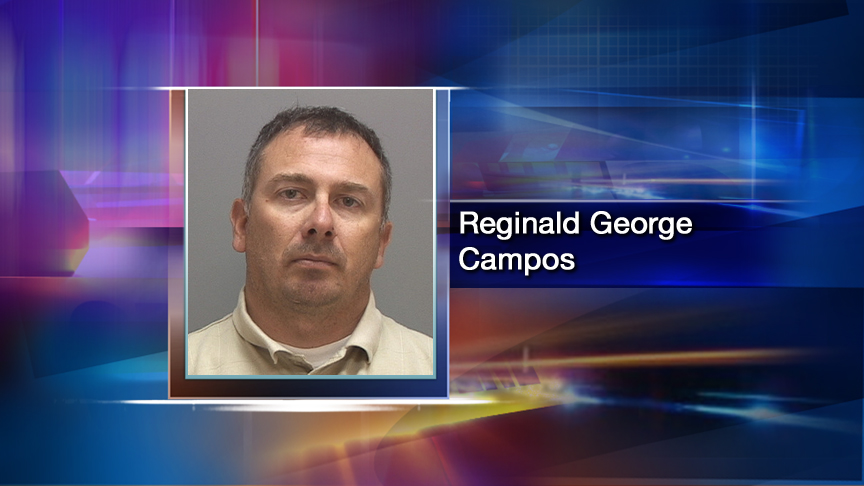
Reginald Campos was arrested for attempted murder by the Salt Lake County Sheriff's Office.
The girls got into the car and drove away, but SerbeckHOA president followed. Police say they never identified themselves as members of neighborhood watch.
"The SUV does some funny maneuvers with the car, gets behind them, starts following them. This freaks them out because they think the older men are stalking them," said Salt Lake County Sheriff's Lt. Don Hutson.
The girls became upset and of them called her father, 43-year-old Reginald Campos, and said the men were stalking them.
When the girls arrived home, Campos sent three of the girls inside and he and his daughter went looking for the two men and found them in an SUV a few blocks away.
Lt. Don Hutson said, "They both got out of the vehicle. They were both armed with handguns ... words were exchanged, there was a verbal altercation, and unfortunately Mr. Campos, who is the father of the young lady, fired two rounds, possibly three rounds, at Mr. Serbek."
Authorities say Serbeck was hit with one of the bullets in the left shoulder and it traveled near his spine.

Enlarge image
"We received the initial call, and essentially it was a 911 call from a gentleman who said, ‘I've shot somebody, I need the police,'" Hutson said.
"I just had someone chasing my daughter. And when I confronted them, they pulled out a gun and I shot him," Campos tells the 911 dispatcher. "He's down on the ground. He needs an ambulance. He's hurt. He's down."
Serbeck was flown by a helicopter to Intermountain Medical Center in very critical condition.
Neighbors say Campos was just protecting his daughter.
"Reggie is a decent, loving husband; loving neighbor, a good guy, always looking out for, in particular, our little street," said KanaMarie Poulson.
Neighbors close to Campos say they knew nothing about a local neighborhood watch.
Serbek's friends say he'd been patrolling the last few months because of recent burglaries. He has a military background, but mostly a calm demeanor.
"It's going to be very debilitating for the neighborhood to have such an all-star person like that be hurt this way, and his family," said Sheryl Babcock.
The Salt Lake County Sheriff's Office arrested Campos for attempted murder. The Sheriff's office says Campos did not have a concealed weapons permit, but Serbeck did.
The Salt Lake County District Attorney will screen the case.

Also from the same news media in Salt Lake Utah, in a related story, another parallel to the Sanford Florida police department's position:
SLCO Sheriff's Office: When on neighborhood watch, leave guns at home
SALT LAKE CITY -- Salt Lake County sheriff's deputies say they have no record the man shot Tuesday night while paroling a Bluffdale neighborhood was part of a neighborhood watch group in the area.
Though neighborhood groups can organize on their own, law enforcement agencies say they don't sponsor the kind of program it appears this neighborhood had.


Neighborhood watch is a valuable program, but deputies say weapons have no place in it.
Salt Lake County Sheriff's Office Crime Prevention Deputy Levi Hughes said, "We recommend you do not. As a matter of fact, we tell you, you should not carry firearms."
He continued, "If you have a gun, sometimes people will feel more empowered. Problem is they don't have the training, knowledge or experience to handle a confrontation that would require a gun."
The Salt Lake County Sheriff's Office sponsors neighborhood watch groups and offers training for members.
"We come to their homes. We meet with them. We talk to them about the things they need to watch out for, things they need to do to protect themselves," Hughes said.
He says the man who was shot, 36-year-old David Serbek, was not part of a sponsored program. The sheriff's office stopped sponsoring mobile patrol about 10 years ago after a shooting and chase involving mobile patrol members.
The sheriff's office says the situation Tuesday night could have been handled differently by Serbeck and the shooter, 43-year-old Reggie Campos. They say a cell phone, not a gun, is the best weapon.
"This is an example of what's happened before and could happen to you if you take the law into your own hands," Hughes said.
Investigators say Serbeck had a concealed carry permit; Campos did not but legally owned his gun.
Gun lobbyist Clark Aposhian says gun training emphasizes disengagement techniques. He says that's always the first step.
"Your first thought should always be, when faced in an encounter like this, is to disengage. Try to step back try to move away. Even if you have a firearm, you don't always win," Aposhian said.
Other law enforcement agencies do sponsor mobile patrol programs. Salt Lake City Police started theirs in 1993 and say it's been very successful. Their policy prohibits any weapons.
If you are interested in learning more about neighborhood watch programs in your area, click on the links below. If your area is not listed, contact your local law enforcement agency for more information:

The outcome of the Utah shooting was not decided until the summer of 2010; had this case gone to court in Florida, under their more expansive Castle Doctrine law, the outcome would have been different, based on similar case decisions in Florida courts, both before and since 2010.
From the same KSL station in Utah, in an op ed piece at the conclusion:
Campos and Serbeck
August 16th, 2010 @ 5:21am

A recent highly-publicized trial offers a sobering reminder to those who choose to carry guns of the responsibility they have to keep their emotions in check when a weapon is at hand.
There they were, two armed men facing each other on a Bluffdale street in July 2009. Only they know exactly what happened that night. In the end, a jury convicted Reginald Campos who was portrayed as a respected family man of attempted murder. He fired a bullet that severed the spine of David Serbeck who was on a neighborhood watch patrol. Campos claimed he did it in self-defense. Serbeck said he didn't provoke what he got.
Our intent is not to rehash details of the trial. Again, only those involved know who said what and how events unfolded. Sadly, one man is headed for prison, while the other will spend his life confined to a wheelchair.
These men were not criminals, but generally respected citizens not unlike thousands of other Utahns who legally own and carry guns.
The story of Campos and Serbeck is cause for contemplation by those who choose to arm themselves. Indeed, each has a responsibility to become properly trained along with having an understanding of the potential consequences of carrying a gun.
******
States like Florida, and any other states that either have laws like Florida or are considering adding them should learn the lessons of these incidents, in order to stop repeating them.  Apparently we do not as yet have a high enough body count from gun toting shooting-eager vigilantes yet to get rid of these shoot first laws.  It begs the question, when is it enough, when will the NRA and ALEC instigated legislators decide to stop taking blood money for this kind of legislation and admit it is a failure.

Another Incident of a Florida Gun Owner Who is the Aggressor in a Shooting, Claiming Justification Under the Shoot First law

Another unarmed shooting victim, threatened by an aggrssive gun wielding shooter trying to tell people what they can and cannot do, people who are acting legally, minding their own business. Another case of a belligerant man threatening others with his big bad gun, another case of gun wielding around kids. Another man with a gun who was dangerous and out of control and acting with disproportionate force to the circumstances. Another example where the shooter's version of events don't track with the events reported by multiple witnesses.
This is Florida. This is Shoot First laws in action, the practice, not the theory.  It is bad law that enables bad people to get away with tragic killings of unarmed people.
From the Tampa Bay Times:

Witnesses dispute Trevor Dooley's 'Stand Your Ground' claim in Valrico shooting

By John Barry, Times Staff Writer
Posted: Dec 14, 2011 08:09 PM 
But testimony showed that the boy — besides James' stunned 8-year-old daughter — was the least confrontational people on the basketball court that day.
Arthur, now 15, said he was visiting friends in the Twin Lakes neighborhood. He took his skateboard to the park and asked permission to practice trick moves from James, who was shooting hoops with his daughter. The only others in the park were a couple playing tennis.
But the boy then heard a voice from across the street. It was Dooley, outside his garage, shouting that he should get off the court, that there was a no-skateboarding sign. The boy stopped.
He heard James call out to Dooley, "Show me the sign."
Michael Scott Whitt, practicing tennis serves nearby with his wife, Michelle, stopped to watch.
They testified that Dooley briefly went into his garage, then started across the street with a dark object sticking out of his waistband. They said James threw his hands up and said, "Oh, come on."
Dooley and James argued over letting the boy skate until Dooley lifted his shirt and said, "F--- you," the Whitts testified.
They said Dooley turned and started home, but James caught up with him. "Mr. James said, 'Don't flash a weapon,' something like that," Michelle Whitt testified.
Then, she said, Dooley pulled out the gun and James grabbed his hand. The men struggled, they fell to the ground, and James ended up on his knees as Dooley lay on his side. They still wrestled for the gun.
The gun fired.
"Mr. James looked up at us," Michelle Whitt testified. "He said, 'Call 911. I've been shot.' Then he fell over."
He was shot through the heart. A medical examiner said he probably died within seconds.
Michael Whitt called 911 at the same time the boy did. On his call, Whitt cried out, "Oh my God. All this over a skateboard."
Dooley's attorney, Ronald Tulin, repeatedly got the Whitts to describe the difference in size and age between the men. He had them restate their testimony that Dooley was headed back to his house before the fight.
But when questioned by prosecutor Stephen Udagawa, the witnesses persisted in labeling Dooley the aggressor.
They said James never tried to punch or choke Dooley. They said he only went for the gun. "There were no threats, no fists," Michelle Whitt said.
She stopped looking after the shot. All she could think to do, she said, was run to James' little girl, standing nearby.
By late afternoon, testimony was incomplete. Judge Moody said the hearing will continue on Jan. 12. It's not known whether Dooley will testify.

There was this more recent development in the Trevor Dooley shooting of an unarmed man, reported by local news.
Child terrified to testify near Trevor Dooley, the man accused of killing her father

Tampa, Florida - It's a rare sight to see a child take the witness stand in court.
Testimony in a court case is usually reserved for adults. It can often be frightening for a child with the formality of court, the imposing stature of a judge and the bailiffs guarding the room, monitoring the coming and going of all who enter.
But children are often key witnesses.
On Thursday at the Hillsborough County Courthouse, a little girl bravely walked to the witness stand, sat down and told her story of watching her father die before her very eyes in November 2010.
Danielle James saw her father as her hero.
After all, David, or D.J. as he was known among family and friends, was an Air Force veteran and was a strong man. Danielle adored her father. The two posed for countless pictures in the short life shared with her father.
One of their favorite things to do was play outside. In fact, both father and daughter were on a neighborhood court in Valrico one day when Danielle's dad began defending a skateboarder nearby.
A bus driver named Trevor Dooley lived across the street and began yelling at the young man, saying he couldn't skate on the neighborhood basketball court.
D.J. told him, "There's no sign saying he can't."
The fight between the two men escalated quickly, and deputies say Dooley went back into his home and got a gun. The men continued yelling and fell to the ground, then a gunshot went off as they were tussling on the ground.
D.J. died and Danielle saw the whole thing.
But did Trevor Dooley have a right to defend himself? He says he was being attacked and held down that day. He wants to invoke the Stand Your Ground law for his defense in this case, since he claims he feared for his life.
A judge will now consider that request after a hearing in court where Danielle told her side of the story, what she saw and what she heard.

The little girl told attorneys, "I heard the gunshot go off. [My dad] said, 'Call the ambulance, I've been shot.'"
Danielle was shy at times and admitted that she didn't like to talk about that fateful day. The child did admit that her father was, in fact, on top of Dooley holding him down when they fell to the ground.
It is unclear how that statement could possibly help Dooley in his case for Stand Your Ground, since the child admitted her father was on top of Dooley and wouldn't let him go.
Dooley watched the proceedings from a separate courtroom.
The judge will release her decision in the upcoming weeks.

No Confidence


Conservative Cookie Cutter Legislation from a Single Secretive Source

ALEC model legislation is the basis for 'cookie cutter' one-size-fits all standard legislation that benefits a select group of secretive corporations being passed in state after state.  It is not original legislation, it is not legislation that is written on the basis of ALL legislators being invited to compare notes and share what works in their states.

The NCSL in contrast provides very open meetings on issues and legislation, so what has been tried and proven effective solutions can be selectively adapted in other states on a non-partisan or bi-partisan basis.  There is no financial incentive offered and no inducement to enact  special interest legislation at the NCSL, unlike ALEC.

The World Bank, in describing corruption in politics and government, uses the single clear, concise definition.  They use it worldwide, and they use it to define corruption in a variety of circumstances.  It has a very simple criteria, which is elaborated on here at some length, and in greater detail than this excerpt, but this is the basis, the core definition:

How do we define corruption?

The term corruption covers a broad range of human actions. To understand its effect on an economy or a political system, it helps to unbundle the term by identifying specific types of activities or transactions that might fall within it. In considering its strategy the Bank sought a usable definition of corruption and then developed a taxonomy of the different forms corruption could take consistent with that definition. We settled on a straightforward definition—the abuse of public office for private gain.1 Public office is abused for private gain when an official accepts, solicits, or extorts a bribe. It is also abused when private agents actively offer bribes to circumvent public policies and processes for competitive advantage and profit.

I would argue that ALEC is effectively an entity that rewards politicians for an abuse of public office for gain, a form of corruption, a form of .  ALEC is comprised of corporations that draft government legislation that benefits them unfairly and preferentially, either directly or indirectly, and which rewards the conservative politicians who enact that legislation for those corporations by political support directly to their campaigns, to their parties, and indirectly through PACs and Super PACs.  Where ALEC corporations do not reward the conservative politicians who enact the corporate drafted legislation with financial incentives relating to election, they reward conservative politicians by subsidizing and financing the advancement of the causes, largely the culture war causes, of those politicians instead of and in place of donating huge amounts of money to influence elections.  The domination of the media through ads, often misleading and misrepresentative and factually inaccurate ads, in the 2010 and 2012 elections is unprecedented.  These are the corporations and few wealthiest individuals that are funding those media blitzes with unprecedented millions upon millions of dollars.  In either case, an action occurs that is outside the appropriate public political process, the legislation is written so as to benefit the  corporations rather than being in the interest of the constituents, and there is some form of compensation offered for doing so, and often very large amounts of money are involved.  That is the bribery, the financial reward, for writing legislation which INCREASES their profits and which DECREASES either the financial well being of citizens, or services, safeguards and protections for those citizens.
If it were so innocent, it would be done in the open. Politicians wouldn't lie about it.  People wouldn't be thrown out of ALEC meetings - not just any ordinary curious people have been thrown out, but politicians who had paid to attend, and who had been INVITED to attend as well as the press have been barred or removed from attendance.
I call that corruption, where there is an action that is sought for gain, and a payoff for performing that action.  If it were not being done by conservatives, and involving conservative culture war causes, the conservatives who condone ALEC legislation would call it corrupt too.  But instead they apply a double standard to what is corrupt and what is not corrupt in our political process.  They have, simply, been seduced.  It is hardly the first time we have seen double standards applied by conservatives, with one lower standard used to assess their own conduct, and a higher standard applied to others. 
What is so insidious about ALEC is that their 'model legislation', that they write for their tame pet legislators to pass for them, is that they arrange for that same exact legislation to be passed over and over, state after state, with only minor variations, where they can contrive a conservative majority of politicians to do their corporate business rather than the tax payers 'business.

The Center for Democracy's PR Watch noted this about the Florida legislation which is so very similar to the recently vetoed Minnesota Shoot First legislation:

ALEC Ratified NRA-Conceived Law That May Protect Trayvon Martin's Killer

"A Florida law that may protect the man who shot and killed 17-year-old Trayvon Martin in February is the template for an American Legislative Exchange Council (ALEC) "model bill" that has been pushed in other states. The bill was brought to ALEC by the National Rifle Association (NRA), and fits into a pattern of ALEC bills that disproportionately impact communities of color.
As Media Matters reported earlier, Florida's "stand your ground" law is nearly identical to the ALEC Castle Doctrine Act.
From the Florida law:
(3) A person who is not engaged in an unlawful activity and who is attacked in any other place where he or she has a right to be has no duty to retreat and has the right to stand his or her ground and meet force with force, including deadly force if he or she reasonably believes it is necessary to do so to prevent death or great bodily harm to himself or herself or another or to prevent the commission of a forcible felony.
And from the ALEC model:
(3) A person who is not engaged in an unlawful activity and who is attacked in any other place where he or she has a right to be has no duty to retreat and has the right to stand his or her ground and meet force with force, including deadly force if he or she reasonably believes it is necessary to do so to prevent death or great bodily harm to himself or herself or another, or to prevent the commission of a forcible felony.
NRA 2005 Castle Doctrine ALEC
Florida Senator Durell Peadon, an ALEC member, introduced the law in his state and it passed in early 2005; the NRA was behind the bill and its lobbyist Marion Hammer reportedly "stared down legislators as they voted." After Governor Jeb Bush signed it into law, Hammer presented the bill to ALEC's Criminal Justice Task Force (now known as the Public Safety and Elections Task Force) months later.
As the Center for Media and Democracy has uncovered, the NRA boasted that "[h]er talk was well-received," and the corporations and state legislators on the Task Force voted unanimously to approve the bill as an ALEC model. As CMD and Common Cause have noted, ALEC Task Force meetings are closed to the press and public, but corporations and ideological special interests or trade groups like the NRA vote as equals with elected officials. At the time, as CMD has documented, Wal-Mart was the corporate co-chair of the Task Force. Since becoming an ALEC model, 16 states have passed laws that contain provisions identical or similar to the ALEC "Castle Doctrine Act." In 2007 it was passed in four states and highlighted by ALEC on their "legislative scorecard," as discovered by Common Cause.
In 2011, controversial governor and ALEC alum Scott Walker signed into law in Wisconsin a Castle Doctrine bill that echoes the ALEC bill in key elements. On March 3 of this year, 20-year-old college student Bo Morrison was shot and killed by a homeowner in Slinger, Wisconsin as the young man hid from police after attending an underage drinking party. Because of the Castle Doctrine, no charges will be filed in the shooting. Like Trayvon Martin, Bo Morrison was black.
Codifying Racial Bias
“The 'Stand Your Ground' law is a license to kill,’’ former U.S. attorney Kendall Coffey told NBC News, noting that the number of "justifiable homicides" in Florida has tripled since the law was passed in 2005.
The Castle Doctrine and its "stand your ground" provisions give license for people to engage in vigilantism without liability. As such, the ALEC bill can put the decision to take a life in the hands of a person whose fears are motivated by prejudice and racial bias. The law establishes a presumption that a person acted in self-defense if a killer claims they had a reasonable fear of bodily harm, but in situations like the killing of Trayvon Martin, where there were few eyewitnesses other than the alleged killer and the person who is killed, the presumption of immunity can be very difficult to rebut. In those circumstances, unfounded fear based on racial prejudice that leads to murder could end up being protected under the law.
If the ALEC "Castle Doctrine Act" opens the door for racial bias to be protected under the criminal justice system, the ALEC model "Voter ID Act" may sanction racial prejudice in the electoral system.
Let the people voteThe ALEC "Voter ID Act" would require voters show only certain kinds of photo IDs at the polls, which could potentially disenfranchise millions of people who do not have the required photo ID but who have proof of identity and residency -- primarily people of color, the poor, and the elderly. A study from the Brennan Center found approximately 5 million people nationally do not have the state-issued IDs that the new laws require to vote. In Wisconsin, around 220,000 eligible voters lack ID, including around half of all African-Americans and Latinos and a quarter of all elderly citizens.
"The heart of the modern block the vote campaign is a wave of restrictive government-issued photo identification requirements," states a December report from the NAACP. "In a coordinated effort, legislators in thirty-four states introduced bills imposing such requirements. Many of these bills were modeled on legislation," the report notes, approved by corporations and politicians through the "American Legislative Exchange Council (ALEC)—a conservative advocacy group whose founder explained: 'our leverage in the elections quite candidly goes up as the voting populace goes down.'"

ALEC Meetings Not Representative

ALEC ExposedWhile some ALEC bills disproportionately affect communities of color, it may be little surprise that African-Americans and Latinos are mostly absent at ALEC meetings. The 2011 ALEC meeting in New Orleans was overwhelmingly white based on the observations of those attending. But the lack of representation is striking for an organization purportedly concerned with giving a voice to those affected by government action.
After the Center for Media and Democracy analyzed and made available over 800 previously-secret ALEC "model bills" in July, ALEC's National Chair, Louisiana Rep. Noble Ellington, spoke with NPR's Terry Gross about the organization. Gross asked Ellington, "Why give corporations such a big say in drafting legislation?" Ellington replied, "Well, partly because they're one of the ones who will be affected by it."
While corporations may have had a say in drafting legislation, people representing populations most affected by ALEC model bills -- like communities of color -- were not in the closed-door meetings where politicians vote as equals with lobbyists. But some are raising their voices -- Color of Change has launched a campaign encouraging corporations that rely on business from African-Americans to stop funding the American Legislative Exchange Council (ALEC) through corporate membership dues.
The Color of Change ALEC petition is available here. The group's petition demanding justice for Trayvon Martin is available here."

No one should be surprised at the Trayvon Martin shooting; it is part of a consistent larger pattern in these states with the Shoot First laws. In these states there has been a huge increase in the number of shootings of people where self defence is claimed, where little if any investigation is performed, where no one is arrested or prosecuted, where too much benefit of the doubt is given the shooter.  Many of the victims are unarmed, as Trayvon Martin was; many of the incidents were conflicts initiated by the shooter, as Trayvon Martin's was.  And in many of the shootings, so long as the shooter asserted self-defence, there was little if any investigation, and no prosecution because the bar for doing so was made unfairly difficult for police.  Subjective fear, rather than objective threat, became the yardstick.  These are exactly the results predicted by law enforcement and the prosecutors organizations when they originally opposed this legislation.
There is nothing inherent in having a gun which should give a person a greater benefit of the doubt than a person who is shot.
But right wing lawmakers get a lot of money either donated to them or their party, or spent on their behalf for passing these laws for special interests instead of representing OUR interests, and that is wrong, that is corrupt.
Look at the laws in the states with this legislation.  They were all passed on overwhelmingly partisan votes by conservative legislatures, and the laws are all so similar they are as identical as cookies from the same cookie cutter on a plate.  And the same special interests benefit, every time.
A perfect example of this is described in this Media Matters piece:
NRA's Campaign For "Stand Your Ground Laws" Continues After Trayvon Martin's Killing
March 21, 2012 7:00 am ET by Matt Gertz
The National Rifle Association's effort to pass Florida-style "Stand Your Ground" laws in other states has continued unabated in the wake of the February 26, Florida teenager Trayvon Martin was confronted, shot, and killed by neighborhood watch volunteer George Zimmerman.
Since Martin's tragic death, media outlets have noted the role of the state's laws in providing Zimmerman with a legal self-defense claim that may prevent him from ever being successfully prosecuted. According to Mother Jones, Florida courts have found that under that statute, a "defendant's only burden is to offer facts from which his resort to force could have been reasonable" while "the State has the burden of proving beyond a reasonable doubt that the defendant did not act in self-defense."
16 states have reportedly passed similar legislation since Florida's 2005 adoption of the statute, often with the strong support of the NRA. This is no coincidence; the NRA has been affiliated for years with the American Legislative Exchange Council (ALEC), which has pushed model legislation expanding when it is legally permissible to use deadly force through its network of conservative state legislators.
The controversial circumstances of Martin's death have not slowed the NRA's effort to push for the passage of such laws: The organization's lobbying arm spent the weeks following his death promoting similar statutes in Iowa, Alaska, and Minnesota.
  • On March 16, the NRA's Institute for Legislative Action (ILA) criticized the Judiciary Committee chairman of Iowa's state Senate for failing to hold hearings on "NRA-initiated HF 2215, the Stand Your Ground/Castle Doctrine Enhancement." According to NRA-ILA, the bill would "remove a person's 'duty to retreat' from an attacker, allowing law-abiding citizens to stand their ground and protect themselves or their family anywhere they are lawfully present." The group urged supporters to contact state Senators and tell them to support the bill. NRA-ILA previously told supporters to contact Democratic members of the Iowa House after they "left the Capitol building in an attempt to block consideration of these pro-gun bills" on February 29.
  • On March 14, NRA-ILA urged Alaskan supporters to contact their state Senators and tell them to support House Bill 80, which it termed "important self-defense legislation that would provide that a law-abiding person, who is justified in using deadly force in self-defense, has 'no duty-to-retreat' from an attack if the person is in any place that that person has a legal right to be." NRA-ILA also promoted the bill on March 5, March 8, and February 29.
  • On March 5, NRA-ILA executive director Chris W. Cox criticized Minnesota Gov. Mark Dayton for vetoing House File 1467, which Cox said "would have removed the duty to retreat for crime victims currently mandated under Minnesota state law and precluded victims from facing prosecution for lawfully defending their lives." NRA-ILA also urged supporters to contact Dayton and urge him not to veto the bill on March 1 and February 29.
The NRA has referred to Florida's statute as "good law, casting a common-sense light onto the debate over the right of self-defense." The organization is unlikely to be satisfied until that "common-sense light" has been spread across the country, regardless of what tragedies occur in the meantime.

Wednesday, March 21, 2012

Fight or Flight - the Shoot First /Stand Your Ground laws

What follows is another CNN report that elaborates on the premise of Shoot First laws, called by their supporters Stand Your Ground.  It is worth noting as context that in Florida, law enforcement and prosecutors opposed the law because they anticipated the very same kinds of problems highlighted by the Trayvon Martin case, and others.
That was true in Florida, and it was the basis for Governor Dayton quite wisely opting to veto the attempt to pass this ALEC written, ALEC promoted legislation here in Minnesota.  ALEC is a special interest group which includes the NRA; the NRA represents the gun and ammunition manufacturing industry.  Other member corporations of ALEC include WalMart, which sells ammunition and firearms.  WalMart at one time had agreed not to sell handguns or ammunition for them as the result of a settlement with Mayors Against Illegal Guns because of violations of the law relating to sales, which you can read about here.
Last year WalMart, another prominent participant in ALEC, resumed gun sales because it is a profitable type of merchandise for them.  Time wrote about it here:
Walmart is resuming gun sales at half its stores across the United States in a bid to attract male buyers and revive its appeal as a one-stop shopping destination.
Company spokesperson David Tovar says it was a business decision to sell guns in certain stores, as the appeal of the guns were broader than they originally thought. He added the company was still committed to responsible gun sales, saying it would maintain compliance of all applicable local, state and federal laws.

...Walmart, the world’s largest retailer, had pulled guns from the shelves of its U.S. stores five years earlier, along with thousands of less popular items. But after a customer backlash, they put many of the products back on the shelves
...Federally tracked gun sales in the U.S. grew more than 12.7% in the first quarter of the year, but the sales were mostly for handguns, which Walmart will not sell and has not sold since the early 1990s when it faced lawsuits because of its notoriously lax training for gun clerks. In 2008, the company voluntarily adopted stricter gun sales policy as part of an agreement with Mayors Against Illegal Guns.
Selling ammo is profitable for WalMart; it is arguably a bloody profit.  (Common Cause did an excellent report on the connection between ALEC and corporations which included WalMart and Koch Industries, which you can read here.) Jared Loughner last year went to not one but two WalMarts to buy the ammo he used to shoot Gabby Giffords and to kill and wound the other people in the Tucson mass shooting.  He was refused at the first WalMart, because he seemed to be behaving oddly; but he was sold the ammunition at the second store without any questions.  WalMart appear to have a retail profit motive as well as the NRA represented gun and ammo manufacturers appearing to have wholesale profit motives driving their support for the Shoot First / or Stand Your Ground laws and increasingly lax carry laws, and the reciprocity laws they have promoted through exclusively right wing politicians.  The increased shootings that result are just collateral damage that is secondary to their profit margin.  A little red blood on the streets and side-walk is the price to pay for black ink in the profit columns of their corporate ledgers.
Supporting causes dear to the hearts of the political right is part of the ALEC seduction, the payoff, for right wing politicians that overrides the objections of law enforcement and prosecutors, in the face of the evidence that the predicted problems DO in fact occur.  The gun carriers are frequently the belligerents who start conflicts, and the victims of the shootings are frequently unarmed, and not disproportionately dominant physically.  The self-defence shooting laws make it easier for the shooter to avoid accountability, and emboldens them to use deadly force far more often, where it is disproportionate force.  

This is NOT a unique pattern to Florida.

How 'duty to retreat' became 'stand your ground'

By Jeffrey Bellin, Special to CNN
updated 5:51 AM EDT, Wed March 21, 2012
Tallahassee defense attorney Deveron Brown talks to Florida Gov. Rick Scott, right, about the shooting of Trayvon Martin.
Tallahassee defense attorney Deveron Brown talks to Florida Gov. Rick Scott, right, about the shooting of Trayvon Martin

STORY HIGHLIGHTS
  • Jeffrey Bellin: Until recently, Florida's self-defense law included a "duty to retreat"
  • In 2005, Florida overrode law enforcement objections, adopted a "stand your ground" rule
  • Bellin says that even on a sidewalk, people may defend themselves with deadly force
  • He says "Stand your ground" may ultimately decide outcome of Trayvon Martin shooting
Editor's note: Jeffrey Bellin, an assistant professor of law at Southern Methodist University Dedman School of Law, formerly served as a federal prosecutor in Washington, D.C.
(CNN) -- The tragic killing of Trayvon Martin and the initial decision by the police not to arrest George Zimmerman for that killing have focused public attention on Florida's "stand your ground" law.
According to police, Zimmerman claims self-defense, but many observers can't understand how a grown man with a gun can plausibly claim that he was forced to kill a teenager armed only with some candy.
If that's the law of self-defense in Florida (and elsewhere), these observers argue, the law needs to change.
Jeffrey Bellin Jeffrey Bellin
The law of self-defense is at its core about reasonableness. If a person reasonably perceives a serious threat of harm, and uses reasonable force to meet that threat, the law justifies even deadly force, and it does so even if it turns out that the perceived threat was illusory.
People have differing views of what's reasonable and, as a consequence, self-defense laws (which vary by jurisdiction) have always attempted to further define the concept. Until very recently, Florida's definition of reasonableness, as in many states, incorporated a longstanding principle, the "duty to retreat."
This principle required that someone who found themselves in a violent confrontation had to try to defuse the situation and retreat "to the wall" before resorting to deadly force.
In other words, deadly force was only permitted as a last resort. The basic idea was simple: If more people backed down, retreated or stepped aside, fewer people would be killed.
The "duty to retreat" also made it easier for prosecutors to prove that a killing was not in self-defense. The facts that can be proven are often murky (particularly when of the two people who know what happened, one is the defendant and the other is dead) and prosecutors could often, by pointing to a defendant's failure to retreat, obtain a conviction even without establishing the precise facts.
In American jurisdictions there has long been an exception to the duty to retreat called the "Castle Doctrine." As then-Judge (and later U.S. Supreme Court Justice) Benjamin Cardozo explained in 1914: "It is not now and never has been the law that a man assailed in his own dwelling is bound to retreat. If assailed there, he may stand his ground and resist the attack. He is under no duty to take to the fields and the highways, a fugitive from his own home."
In recent times, "stand your ground" laws extended this concept in many states beyond the home to any place where a person might lawfully be found, such as a bar or a public sidewalk. Florida's version enacted in 2005 (over the objection of many in law enforcement) is one of the most far reaching.
The law states that a person "who is attacked" anywhere he is lawfully present has "no duty to retreat and has the right to stand his or her ground and meet force with force, including deadly force if he or she reasonably believes it is necessary to do so to prevent death or great bodily harm."
Importantly, a person cannot invoke this provision if he is "engaged in unlawful activity" or "initially provokes the use of force against himself." Finally, in Florida, once self-defense becomes an issue at trial, the prosecution must prove beyond a reasonable doubt that the defendant did not act in self-defense -- a heavy burden.
This is the legal backdrop against which Florida's prosecuting authorities must assess all claims of self-defense, including Zimmerman's. In an ideal world, law enforcement would make this assessment by thoroughly investigating the case and, after determining the provable facts, comparing those facts to the law.
Critical to this determination will be evidence reflecting: how the confrontation began and how the suspect acted after the confrontation (prosecutors often look for actions such as flight or a cover-up that indicate a "consciousness of guilt"). Perhaps most critically, investigators will compare all the evidence (physical and otherwise) with the suspect's statement (if any) about what happened.
If the investigation reveals sufficient evidence for a reasonable jury to conclude that Zimmerman was not acting in self-defense (as Florida law defines that concept), he can be prosecuted. If not, charges are unwarranted.
Depending on the facts that ultimately emerge, the "stand your ground" law may ultimately control the legal outcome of the Trayvon Martin case. If, as a result, Florida's citizens and legislators (and those in other states) see that law in a new light, they can change the law, perhaps leading to fewer tragic outcomes in the future.
For it may (as many suspect) be the case that Zimmerman was not forced to kill Trayvon Martin. But in a state like Florida with a "stand your ground" law, that is no longer the standard for determining whether someone acted lawfully in self-defense.

Trayvon Martin's Shooting Is Not the Only Unarmed "Shoot First" Killing

There is a pattern of disproportionate force being used; so-called self-defence shootings have tripled in Florida.  Many of those who were shot were unarmed, and the instigators of the conflict in which the shootings occurred were the person who was the person who was armed.  It appears that in some, possibly many if not all of these shootings, the armed person is the one who is both initiating and escalating violent conflicts, where this did not occur before.  BOTH the laxer carry permit laws and the 'shoot first' self-defence laws which have lowered the bar for gun violence are to blame.  We have been assured in the past that more people carrying guns, and more lenient self-defence shooting laws would NOT result in blood running in the streets and on the side walks of those states.  That has not been true; there is far more avoidable gun violence, and most of the additional shootings is by gun carriers involving themselves in non-essential shootings that are getting a free pass under claims of self-defence.  Trayvon Martin's shooting by a cop-wannabe vigilante is just one example.  Here is another.  CNN senior analyst Jeffry Toobin is correct - we should all be holding accountable  the rightwing politicians who pushed this legislation through on largely partisan votes in 15 states.

From CNN:Editor's note:

Does Florida law let killers go free?

By Jeffrey Toobin, CNN Senior Legal Analyst
updated 8:36 AM EDT, Wed March 21, 2012
Jeffrey Toobin is a senior legal analyst for CNN and a staff writer at The New Yorker magazine, where he covers legal affairs.
(CNN) -- Trayvon Martin went out to buy some Skittles -- and was shot dead before he made it home. The case is horrifying, maddening, grotesque. And -- perhaps worst of all -- there may be nothing Florida law enforcement can do about it.
As the world now knows, the 17-year-old Martin walked to a store in Orlando to buy some snacks on the night of February 26. George Zimmerman, a volunteer Neighborhood Watch captain, thought the boy looked suspicious and called 911. The 911 operator told Zimmerman to keep his distance -- police would be sent -- but there was a confrontation between Zimmerman and Martin. Martin was killed with a single shot to the chest. Florida authorities have not arrested Zimmerman, and federal authorities recently joined the investigation.
The legal question at the heart of the case involves Florida's so-called "stand your ground" law, which the legislature passed, at the behest of the National Rifle Association, in 2005. Before that time, Florida law resembled that of most other states; during confrontations, individuals had a duty to retreat rather than to respond to provocations. Under the new law, a person is allowed to use deadly force if he is in a place he has a right to be and feels reasonably threatened with serious harm.
Jeffrey Toobin
Jeffrey Toobin
In this case, then, the question is whether Zimmerman was in such a place and felt reasonably threatened. The 911 operator told Zimmerman to keep his distance from Martin, but Zimmerman had a right to be on the street. That's where neighborhood watch volunteers work.
Clearly, the question at the heart of the case is whether Zimmerman reasonably felt threatened. On this issue, the evidence currently seems murky. There appears to have been some sort of confrontation between Zimmerman and Martin. Police found Zimmerman with an injury to his head. Most important -- and most tragic -- the police will hear only one side of the story about this confrontation. Trayvon is not around to tell his story. The continuing investigation will surely focus on finding other witnesses.
Neighbor: Shooting wasn't self defense
Psychiatrist: Florida shooter 'paranoid'
The facts of this case show why the "stand your ground" law is so important. The law focuses on the subjective understanding of the shooter. Was his understanding of the situation "reasonable"? Ultimately, that would be a question for the jury to decide, but it still gives a lot of deference to the perpetrator of a violent act. The new law even allows a disproportionate response; if someone comes at you with a fist, you can reply with a gun.
In light of the shift in the law, it's not surprising that since the law went into effect, reports of justifiable homicides have tripled, according to the Florida Department of Law Enforcement.
Another case under litigation in Florida highlights the effect of the law. In September 2010, David James was playing basketball with his 8-year-old daughter on an outdoor court in Valrico. A boy was skateboarding on the court at the same time, and Trevor Dooley, a man who lived in the area, told the boy he shouldn't be skateboarding there. James stood up for the boy, and he and Dooley had a confrontation.
Dooley was carrying a gun and wound up shooting James dead. Dooley asserted that he felt threatened by James, and has asked that the case be dismissed before trial under the "stand your ground" law. (The judge will soon make a ruling.)
In both of these cases -- in the deaths of both James and Martin -- the legal defense for the shooters appears to rely almost completely on the "stand your ground" law. In the death of David James, prosecutors are doing their best against tough odds. In the death of Trayvon Martin, it's prosecutors who are taking the heat for failing, thus far, to bring any charges against George Zimmerman.
But this outrage, understandable though it is, might be directed somewhere else as well. The Florida legislators who voted for the "stand your ground" law -- and Gov. Jeb Bush, who signed it -- have something to answer for as well.

Tuesday, March 20, 2012

A Summary

What this doesn't mention is how many of the people shot, allegedly in self-defense, under the Stand Your Ground laws, more accurately described as Shoot First laws, were in fact unarmed, and who posed a questionable danger to the shooter.  Some of them were for example, shot in the back.  Yet they have not been arrested either.  To date, I have yet to find a single example of a person regardless of the circumstances of these individual shootings who has been held accountable, due to the requirement that the shooter ONLY needs to have "FELT" or "BELIEVED" he was at risk, RATHER than he actually WAS AT RISK by an objective criteria.  The laws make the criteria entirely subjective, and remove any civil liability. 

To prove a shooter did not BELIEVE he was at risk, you have to prove mental state. Short of being able to produce evidence of planning a shooting, on a par with first degree murder, that is impossible.  So far as I can find, few if any of these appear to have been investigated in any detail.

from Think Progress:
The Tragedy Of Trayvon Martin

Mar 20, 2012
By Brad Johnson
On February 26, 2012, a 17-year-old African-American named Trayvon Martin was shot and killed in Sanford, Florida. The shooter was George Zimmerman, a 28-year-old man. Zimmerman admits killing Martin, but claims he was acting in self-defense. Florida’s “Stand Your Ground” law, passed in 2005, allows people to use deadly force if they believe they’re in imminent danger. Three weeks after Martin’s death, no arrests have been made and Zimmerman remains free.


FBI tells ABC News they are monitoring the Trayvon Martin investigation and have been in touch with local authorities. Late Monday, March 20, after a letter from the NAACP, the United States Department of Justice, the FBI and the U.S. Attorney announced they were launching “a thorough and independent review” of the shooting death of Trayvon Martin. The Florida state attorney has sent the Trayvon Martin case to a grand jury. The Seminole County grand jury will be called to session on Tuesday, April 10.
Here’s everything you need to know about the case:


1. Zimmerman called the police to report Martin’s “suspicious” behavior, which he described as “just walking around looking about.” Zimmerman was in his car when he saw Martin walking on the street. He called the police and said: “There’s a real suspicious guy. This guy looks like he’s up to no good, on drugs or something. It’s raining and he’s just walking around looking about… These a**holes always get away” [Orlando Sentinel]


2. Zimmerman pursued Martin against the explicit instructions of the police dispatcher:
Dispatcher: “Are you following him?”
Zimmerman: “Yeah”
Dispatcher: “OK, we don’t need you to do that.”
[Orlando Sentinel]


3. Prior to the release of the 911 tapes, Zimmerman’s father released a statement claiming “[a]t no time did George follow or confront Mr. Martin.” [Sun Sentinel]


4. Zimmerman was carrying a a Kel Tel 9 millimeter handgun. Martin was carrying a bag of Skittles and a can of iced tea. [ABC News]


5. Martin weighed 140 pounds. Zimmerman weighs 250 pounds. [Orlando Sentinel; WDBO]


6. Martin’s English teacher described him as “as an A and B student who majored in cheerfulness.” [Orlando Sentinel]


7. Martin had no criminal record. [New York Times]


8. Zimmerman “was charged in July 2005 with resisting arrest with violence and battery on an officer. The charges appear to have been dropped.” [Huffington Post]


9. Zimmerman called the police 46 times since Jan. 1, 2011. [Miami Herald]


10. According to neighbors, Zimmerman was “fixated on crime and focused on young, black males.” [Miami Herald]


11. Zimmerman “had been the subject of complaints by neighbors in his gated community for aggressive tactics” [Huffington Post]

12. A police officer “corrected” a key witness. “The officer told the witness, a long-time teacher, it was Zimmerman who cried for help, said the witness. ABC News has spoken to the teacher and she confirmed that the officer corrected her when she said she heard the teenager shout for help.” [ABC News]


13. Three witnesses say they heard a boy cry for help before a shot was fired. “Three witnesses contacted by The Miami Herald say they saw or heard the moments before and after the Miami Gardens teenager’s killing. All three said they heard the last howl for help from a despondent boy.” [Miami Herald]


14. The officer in charge of the crime scene also received criticism in 2010 when he initially failed to arrest a lieutenant’s son who was videotaped attacking a homeless black man. [New York Times]


15. The police did not test Zimmerman for drugs or alcohol. A law enforcement expert told ABC that Zimmerman sounds intoxicated on the 911 tapes. Drug and alcohol testing is “standard procedure in most homicide investigations.” [ABC News]
16. In a cell phone call moments before his death, Martin told a teenage girl that he was “hounded by a strange man on a cellphone who ran after him, cornered him and confronted him.” “‘He said this man was watching him, so he put his hoodie on. He said he lost the man,’ Martin’s friend said. ‘I asked Trayvon to run, and he said he was going to walk fast. I told him to run but he said he was not going to run.’ Eventually he would run, said the girl, thinking that he’d managed to escape. But suddenly the strange man was back, cornering Martin. ‘Trayvon said, ‘What, are you following me for,’ and the man said, ‘What are you doing here.’” [ABC News]


17. Zimmerman told the police “he had stepped out of his truck to check the name of the street he was on when Trayvon attacked him from behind as he walked back to his truck.” “He said he feared for his life and fired the semiautomatic handgun he was licensed to carry because he feared for his life.” [Miami Herald]


18. Zimmerman was not a member of a registered Neighborhood Watch group. Zimmerman also violated basic Neighborhood Watch guidelines by carrying a weapon. [ABC News]


19. Sanford police chief Bill Lee planned to wrap up the case last Monday without bringing any charges, because, he said, “there is no evidence to dispute the shooter’s claim of self-defense,” which is a sufficient claim under the “Stand Your Ground” law. [Miami Herald]

20. In the first five years “Stand Your Ground” was in effect, justifiable homicides tripled, and the law was a factor in at least 93 cases involving 65 deaths. An investigation of cases from the law’s passage in 2005 to 2010 found that charges were dropped or dismissed for 57 people, and 7 others were acquitted. [Tampa Bay Times]


A petition created by Trayvon’s parents to investigate his killing has been signed by over 500,000 people.

A Picture, Better than 1,000 words

Grand Jury Investigation Called in Trayvon Martin 'Shoot First law' shooting

While I am pleased that this shooting is being so thoroughly investigated, the other Shoot First killings should be examined by the Grand Jury as well.  Most of those also involved victims who were unarmed when they were shot, raising serious questions about the legitimacy of the self-defense claims by the shooters.  No one in those shootings was arrested either, despite questionable circumstances, and the investigations appear to hve been minimal, and possibly insufficient, in those killings as well.  The Shoot First laws, in Florida and in other states, have authorized without accountability the right to commit vigilante justice, and inappropriate use of deadly force without penalty or liability.  It is not only this case, it is part of a much larger pattern.

From MSNBC.com:

Trayvon Martin case to go to grand jury, Fla. state attorney announces
A grand jury will investigate the death of Trayvon Martin, an unarmed 17-year-old shot to death in a gated community in Florida on Feb. 26, state attorney Norm Wolfinger announced Tuesday.

"I share in the desire of the family and the community to accurately collect and evaluate all the facts surrounding the tragic death of Trayvon Martin," Wolfinger said in a news release. "The public is entitled to no less than a thorough, deliberate, and just review of the facts. We intend to honor that commitment."


The Seminole County Grand Jury will be called to session on Tuesday, April 10, Wolfinger said.


Meanwhile, on Monday, the Justice Department and the FBI opened an investigation into the death of the black teenager, who was shot by a neighborhood watch captain who was not arrested.


The Trayvon Martin Shooting to be Investigated by FBI, DOJ Civil Rights Dept.

As I have been reading about the facts in the Trayvon Martin killing, I have been struck by the number of OTHER so-called Stand Your Ground shootings that have had similar characteristics, notably where the victim was unarmed, and where the victim was not in fact a threat to the shooter.  In these cases it has been surprising - at least to me - how many of the shooters were the ones pursuing the victim, attacking the victim, the UNARMED victim, and how often the police were in contact, were very near, and directed the shooter NOT to do what they did.

It was reported by MSNBC.com and the news services this morning that the Trayvon Martin shooting was getting a lot of attention.  That attention resulted at least in part in the FBI and the DoJ actively investigating the shooting, in addition to the Florida Attorney General's office, a change from the FBI having been merely monitoring the investigation in response to outrage over the circumstances.

What struck me as the most significant paragraph in the report came lower down in the text (the bold emphasis added is mine - DG):
The victim's family lawyer, Ben Crump, said public pressure was behind an earlier promise by the Justice Department to review the case. And some Florida legislators are moving to consider a change in the law to prevent a recurrence.
I made a call earlier this morning, after reading this, to the Florida legislature, inquiring about what the status of either repeal or changing the Florida Stand Your Ground law might be.  I understand from the nice staffer to whom I spoke that the legislators themselves are out of session this week, but that they will be back next week - but ONLY to address their redistricting issues.  The regular session won't be back in session until next year, starting in March 2013.  It is a possibility they could have a special session in the fall, but any action looks like it will be more likely after the 2012 election.  However I was assured that the legislators who were back in their home districts were talking about this as a hot topic, and that they were hearing on this subject from their constituents.  So, in that context, I do think there is a reasonable chance of the Florida Stand Your Ground law being revisited in 2013, especially if the Grand Jury is still in session on this (they meet for six month intervals) and if there is still a heightened public awareness on the subject.
This is significant in the context that our Governor Dayton, quite properly, just vetoed similar legislation.  It is similar legislation, because it appears to be ALEC drafted legislation, where we have one size fits only special interest drafted laws that are getting passed by almost exclusively partisan conservatives, with a rare cross-over vote from a democrat - but only rarely.  That matters because it is legislation that only serves special interests and only is supported by a narrow highly partisan section of our populace.  It is legislation that has a number of inherent problems that have not been adequately addressed.

What problems? First and foremost it is unnecessary legislation.  We already have a judicial system that says you don't have to retreat, you can stand your ground in your own home.  It is redundant.  We already have a system that allows you to shoot an intruder in self defense if you are actually in danger.  What this legislation has instituted is that so long as the shooter claims they felt threatened, subjectively, there is no OBJECTIVE examination and no OBJECTIVE proof required to justify that shooting.  There is no adequate accountability.

Effectively we are having shootings take place, without appropriate consequences, that should not be happening.  Shootings LIKE TRAYVON MARTIN's death.  We are having people with guns, like George
Zimmerman, shooting unarmed victims.  Shooters like Joe Horn in Texas, who shot two men on someone else's property, not in his own home or yard, while the police were in the process of responding, as they were in the Trayvon Martin shooting; the police in that case also appear to have told the shooter NOT to do what he did, but the shooter went vigilante on them as well, and acted with unnecessary lethal force to shoot unarmed men.
Under the 'Stand Your Ground' laws, currently in 15 states, although we can at least hope that Florida will correct their mistakes and make it only 14, unarmed victims are being shot by shooters who exceed what we allow police to do with criminals.  Some of the people being killed are doing something wrong, but not something that justifies deadly force being employed.  Others, like Trayvon Martin are not apparently doing anything wrong.  These are shootings that are NOT in defense of life, and which should not be occurring in defense of minor property, especially not when someone is trying to stop what they are doing wrong and attempting to leave.

The Stand Your Ground laws have resulted in vigilante-ism, with untrained and unqualified people using deadly force where we do not allow our law enforcement to do so, for crimes we do not punish.  Either human lives matter - or they do not.  This is inappropriate, it is dangerous; we have innocent people being shot by idiots who should never be allowed a gun or a gun carry permit, much less given this kind of leeway to shoot.  Our right wing extremist legislators have made that legal, have removed any checks and balances that we should maintain for safety, and have removed any accountability through the rights of those who are wronged to sue for wrongful death.

ALL of the evils predicted about the Stand Your Ground laws, are coming true.  These laws need to go. These laws should not be enacted in those states where they do not currently exist.  And the legislators who serve the special interests and the narrow rather than broader electorate, the legislators who keep passing these ALEC written bills.......they need to go too, along with the big money that pays them.

We need to be protected from these shooters, and from these legislators who have enabled them to commit these crimes of deadly force against others, others like Trayvon Martin.

Monday, March 19, 2012

Correcting Shot in the Dark's Errors about ALEC - addendum

How significant is this? On just one day last month - February 14, 2012 - Alliance for a Better Minnesota listed 5 bills drafted by ALEC that were being debated in our Minnesota legislature. ALEC legislation is being introduced and supported all the time. (Alliance for a Better Minnesota provides the ALEC legislation for comparison with the MN legislation):

At 8:15am, the House State Government Finance committee will hear HF 2033--what Republicans call the "Equal Pay and Benefits Act."....Though the language isn't identical, it's clear in both cases public sector workers are being attacked. The same sentiment and ideas lie behind Minnesota's HF 2033 and numerous ALEC model bills and recommendations.

At 10:15am, the House Government Operations and Elections committee will hear HF 1975, which removes the requirement that before an agency seeks out a private contractor, it must first verify that no state employee is able and available to provide the services needed. This is, quite simply, an attack on public workers. It hands their contracts over to private contractors!

...There's still more ALEC to come! At 12:30pm, the Education Finance committee will hear HF 1860. HF 1860 is a bill aimed at defunding and starving Minnesota's public education system by allowing school levy dollars to follow students to charter schools. One of ALEC's main goals in education is defunding public education by driving those dollars to charter schools. Just take a look at the ALEC Charter Schools Act:

"This legislation allows groups of citizens to seek charter from the state to create and operate innovative, outcome-based schools. These schools would be exempt from state laws and regulations that apply to public schools. Schools are funded on a per-pupil rate, the same as public schools. Currently Minnesota operates the most well-known program."

At 1pm, we turn to the Senate for more ALEC hearings. The Senate will hear SF 1577, their controversial, burdensome and unnecessary bill proposing a constitutional amendment requiring law-abiding citizens provide a photo ID to vote.

If all that's just not enough ALEC for you, you're in luck. Also at 1pm, the Committee on State Government Innovations and Veterans will hear our final ALEC bill of the day: SF 1614. SF 1614 has the distinct honor of being one of the Republicans' Reform 2.0 initiatives as well. I wonder if Reform 2.0 and ALEC are related somehow...?

SF 1614 creates a Small Business Regulatory Review Board, which sounds mighty similar to ALEC's Regulatory Flexibility Act.
How many legislators are more or less openly members of ALEC? There are approximately 30 that we know of, but since the members are secretive and the meetings are secretive, and since legislators lie about the legislation they offer and who really wrote it, it's hard to tell who they all are.

A recent MPR report listed this about the legislators and the number of bills since the conservatives gained a majority in both house and senate, quoting Common Cause Minnesota, another group which watches ALEC, so far as it is able:

"It really brings up the question of whose interest do our legislators, really have, these constituents or corporate special interests?" said Mike Dean who is the executive director of Common Cause-Minnesota. His group released a report linking more than 60 Minnesota bills to ALEC model legislation and naming 27 state lawmakers with ALEC memberships.

It is not a good thing to have special interest groups draft and pass their own legislation, it is not a good thing to have the origins of that legislation be a secret from voters and tax payers.  It is not a good thing when the same entities fund election campaigns, with far far greater resources than ordinary human beings who are citizens can bring to the electoral process.  It is not good for us to be lied to about legislation by our elected representatives.  It is, taken as a package, corrupting government - OUR government.  This is not only happening in Minnesota; it is happening to some degree, depending on the number of conservatives cooperating with ALEC, in every state in the nation.

The World Bank has a simple definition for corruption, one which I believe accurately fits quite comfortably the relationship between powerful, rich special interests contriving legislation that is then passed by conservative legislators who benefit either directly from generous donations either to their campaign or benefitting their election campaigns, or more indirectly by funding their pet culture war conservtive causes in exchange for preferential treatment in proposing and passing special interest legislation.

That definition of corruption used by the World Bank  is 'the abuse of public power for private benefit'. That would seem to be ALEC personified.

Sunday, March 18, 2012

Culture War on Women by Kansas Right Wingers;
and Oklahoma, Arizona,

I thought the denial of information in Ignorance Only (what the right prefers to call the more modest sounding abstinence only sex ed) was bad. 

I thought the insistence that the Ignorance Only sex ed that FORCED teachers to provide medically, scientifically inaccurate information about topics like contraceptive failure was bad.

I thought the attempts to legislate that pharmacists could decide to enforce THEIR beliefs on patients, by deciding what prescriptions they wanted to fill and what medications they wanted to deny you, or that they could over-ride your doctor's decisions if they felt like it was bad.

And of course the attempts to deny contraception prescription coverage to women, that was bad.

Then there were the efforts to repeal equal pay, that was bad; and the refusal to support protection for women against violence, that was bad.

And I thought the requirement that abortion providers provide inaccurate, state mandated false and inaccurate information to women seeking reproductive care was bad, because those things ARE bad, they're terrible.  They are state ordered LIES, all of the above, done to make the religious right and the anti-abortion right happy.  Because nothing says right wing like lies institutionalized by law...which is fascism.  They should be ashamed of themselves for being so anti-American, for being such liars.  They should be ashamed, because it should be obvious to them when they lie that they are doing something wrong, that their position is not a valid one if they have to lie to promote it, to get it accepted.

And make no mistake, ALL of those ARE BAD, really really bad and the consequences of those lies are hardest on women.  The right wing are becoming the party of lies, of legislation that intentionally, deliberately, and manipulatively LIES, lies to control people, especially women.

But this newest abomination from the right, in Kansas, but occurring in other states as well, may be the very worst of the bad bunch so far.  It is a reflection of the most invasive, most interfering, most paternalistic and controlling kind of government intrusion into the privacy of the patient and doctor relationship.  It is the most offensive kind of big government, coming of course from those who give lip service to freedom while taking it away, and who give lip service to 'small government' while making the worst kind of big government that over-rides personal choice if it is choice they don't like.  This is the desideratum of the current crop of GOP presidential candidates, especially Santorum; heck this must be a wet dream politically for Santorum.

Cross-posted from Common Dreams (emphasis added in the body of the text is mine - DG)

Published on Monday, March 12, 2012 by Blog of Rights (ACLU)

Kansas to Pregnant Women: "A Little Lie from Your Doctor Won't Hurt You"
by Jennifer Dalven
It's what every pregnant woman I know dreads. Going into that big ultrasound, having the ultrasound tech, who had been so chatty, suddenly go silent. Having her do sweep after sweep across your belly without saying another word, until finally, she gets up and solemnly says, "I am going to get the doctor."
As far as pregnancy nightmares go, I thought that was one of the worst. But now politicians in Kansas are giving pregnant women and their partners something new to worry about. Buried in a sweeping anti-abortion bill is a provision that would immunize a doctor who discovers that a baby will be born with a devastating condition and deliberately withholds that information from his patient. That's right. If the bill passes, a doctor who opposes abortion could decide to lie about the results of your blood tests, your ultrasound, your cvs or your amnio. Lie to you so that you won't have information that might lead you to decide to end your pregnancy or that might lead you to learn more about your child's condition so that you are prepared to be the best parent you can be to your child.
Now, I have been working for a long time defending the right of a pregnant woman to make the best decision for herself and her family, whether that is continuing the pregnancy, adoption, or abortion, based on full, accurate information. I thought I had seen just about every manner of government intrusion into those fundamentally personal and private decisions. I thought I was past the point of being shocked and outraged. But as a mother who has been through those ultrasounds myself, the thought that my doctor could choose to withhold this information from me and take this decision away from me and my husband ... well, let's just say it really touched a nerve.
And, unfortunately, it's not just Kansas. Other states motivated by anti-abortion zeal are jumping on the it's-ok-for-doctors-to lie-to-their-patients-to-prevent-them-from-having-an-abortion bandwagon. Oklahoma recently passed a similar law. And, the Arizona legislature is considering a similar bill.
But I guess I shouldn't be surprised. Despite the rhetoric of anti-abortion politicians about how all these restrictions are necessary to ensure that women's decisions are well-informed, it's never been about that. Doctors who provide abortions already work hard to ensure that every woman has the information she needs to make the best decision for herself and her family. What these bills are about is politicians who think they know better than women and who are trying to impose their own views on abortion on a woman and her family regardless of the circumstances: That's what's behind those now infamous ultrasound bills in places like Virginia, Idaho, and Pennsylvania. That's what's behind the bills in Georgia and Arizona that would ban abortion at the point when a woman often learns about a devastating diagnosis. And that is what is behind so many of the other bills working their way through the state legislatures right now. The Kansas bill is, in a way, just more upfront about it.
Well, enough is enough. We may not all agree about abortion, but we can all agree that these decisions ought to be made by a woman and her family, not a politician. So, whether you are a man or a woman; whether you are already a parent or think you might become one in the future; whether you are blissfully pregnant or unhappily so, if you care about your right to make your own decisions, I ask that you help get the word out. Share this blog on Facebook and Twitter. Send an email with this link to the President of the Kansas Senate. Tell the politicians all over the country to stop interfering in a family's personal and private decisions.
Yes, you read this right.  The Right Wing Extremists want to enact legislation - god knows how, but it seems like a good idea to them - to make legal by calling it an act of conscience, what would be under any other circumstances and by any other standard of professional conduct be considered medical malpractice.  They want to jeapordize any basis for trust in a medical professional.  They want to risk harm to people, real existing people.  This is where the much vaunted big tent on the right becomes the straight jacket of the insane asylum.  The lunatics have hijacked conservativism, and this is the result.  This is where radical right wingers separate from moderate conservatives, and from the rest of us.